Success stories
How to Really Help Your Autistic Child with Social Interaction
-
 |
-
 5 Min read

Share


Years ago, I remember attending a training by Dr Steven Gutstein, Founder of RDI Connect.
Somebody asked him if their child would improve in their socialiazation skills by attending a Social Skills Group.
He was thoughtful for a minute.
Then he replied, ‘It doesn’t happen by osmosis.’
Those words never left my mind.
What did Dr G (as we lovingingly call him) mean by that?
Today, I have authentic evidence of this. And I’d like to share it with you.
Daksh is a loving 9 year old boy who joined the RDI Program 6 months ago.
His parents- Monica and Janak and his older brother, Jayant provide a loving and caring environment and a safety net for Daksh.
Early in the program, I saw plenty of breakdowns, tantrums, emotional dysregulation. Daksh could not sustain a framework without breaking it in some way, in the forms mentioned above.
Here are steps we took to support Daksh and to help his parents to guide him.
Regulation
We started with RCR cycles in a big way. For a couple of weeks we focussed only on this.
RCR stands for: Regulation Challenge Re-organization.
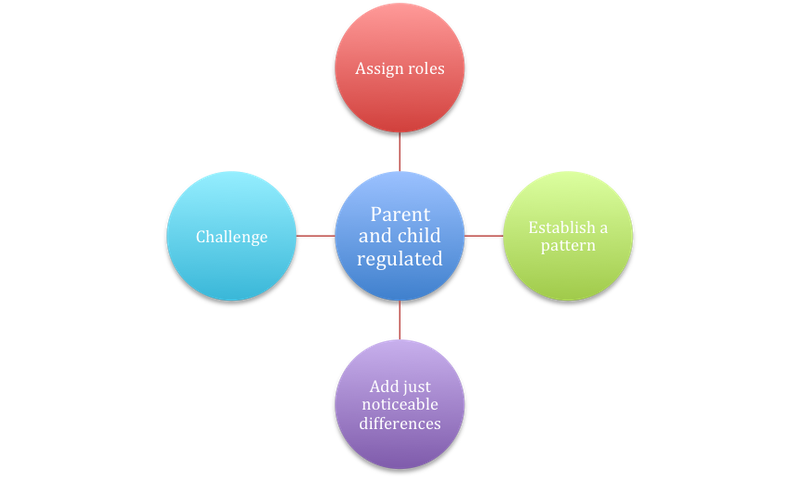
Monica would give herself a role and introduce just noticeable differences in simple activities. Then she would throw in a challenge. Daksh slowly got used to dealing with challenges that came his way.
Re-organization in the RCR cycle occurs when the child notices the JND, and is able to stay regulated within the interaction
If the child is unable to re-organize, the JND was too much. It is up to the adult to simplify and structure the interaction for success again.
(Taken from a presentation by Amy Cameron and Vicky Poston)
Over a period of time, Daksh became calmer.
I can read the question in your mind.
What activity are you talking about, Kamini? How does it work?
For example: You could toss a ball to your child (simple throw and catch). Your child should feel competent in this activity. Slowly introduce slight changes (jnds). Watch carefully to see how your child reacts.
Is he alright with the change? Is he perturbed by it?
If he shows slight anxiety, you may want to slow the pace of interaction till he calms down, don’t add any changes at this point.
Once he is calm, add changes slowly.
By doing these cycles with a variety of activities, you’re teaching your child to regulate.
You can find more information about Regulation in my ebook. See below.
Guided relationship
By working on simple activities through regulation, parents build a loving trusting relationship with the child.
This image explains it beautifully.
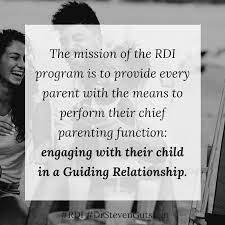
The hallmark of this kind of relationship is ‘trust.’
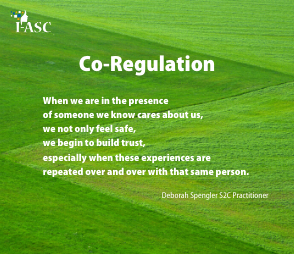
This is what Monica and Janak built with Daksh- a trusting relationship.
Use of declarative communication
Both parents and Daksh’s brother now use ‘Declarative Communication’ as much as possible.
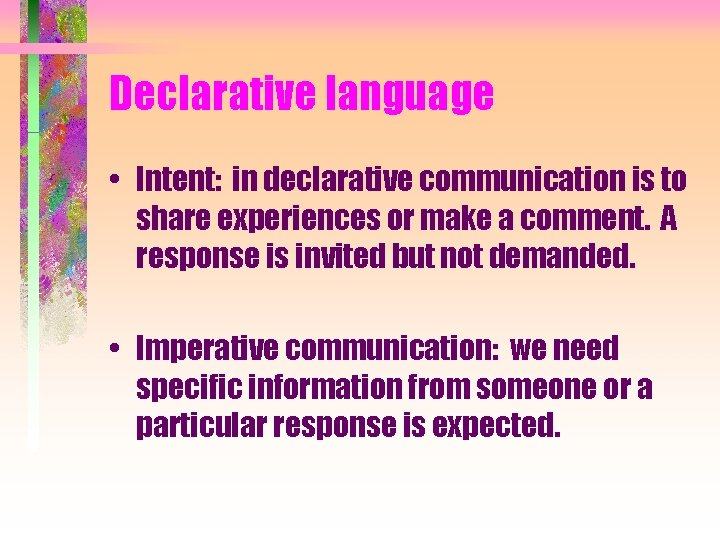
Questions and prompts are limited when we use ‘Declarative Communication.’
Declarative communication helps your child think through situations and helps her to problem solve challenges as they come up.
I love this quote from Dr G.
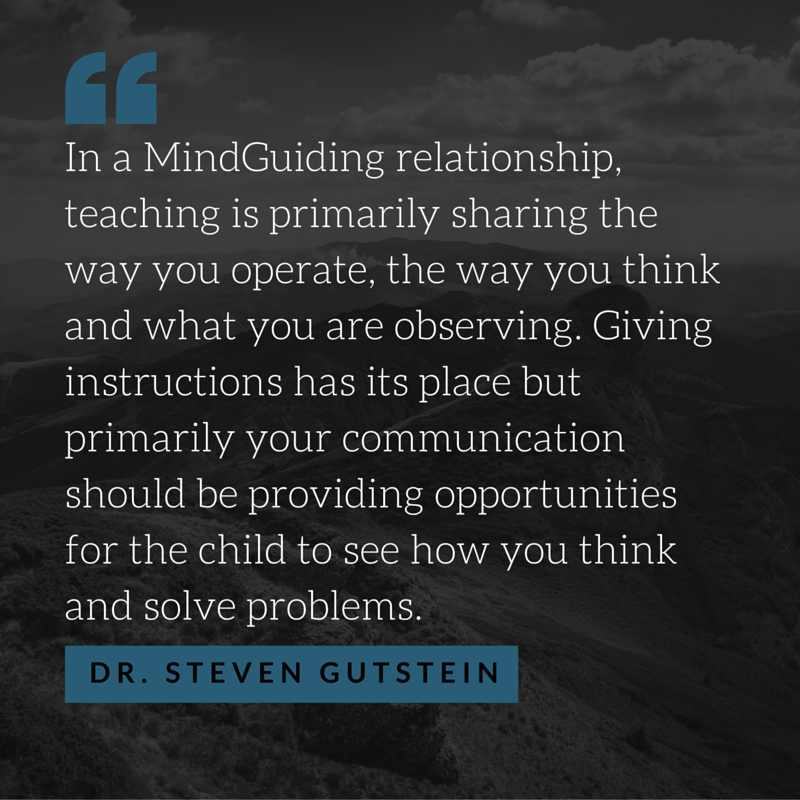
You can read more about Declarative Communication, here.
Using declarative communication with Daksh, helped him to ‘think’ and reduced his anxiety.
Emphasis on problem solving
I saw several frameworks Monica worked on, that pushed Daksh to think for himself.
She let him struggle and make a mess.
It takes a lot from a mother to stay calm, even when her child makes a mistake! We’re emotionally enmeshed with our children and it’s difficult to see them making mistakes.
It did not deter Monica, though.
And it should not deter you, either.
Read here to delve deep into how this helps your child.
Resilience
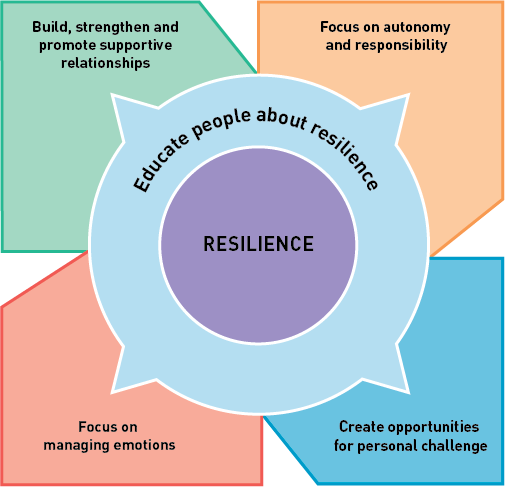
Working on all the above points, led to resilience in Daksh.
Over a period of time, he ‘stayed’ in difficult frameworks.
He began to persist instead of resisting.
He preferred to problem solve rather than leave challenging situations.
You can build resilience in your child too.
The result of this painstaking effort by the family, led to this wonderful event in the video below.
So this is what Dr G meant by, ‘it doesn’t happen by osmosis.’
The brain has to be ready for these kind of engagements.
Slowly and systematically, integration in the brain leads to enhanced interaction.
First with the parents, siblings and then with family and friends.
It’s not about working on skills or building behaviors.
It’s about getting back on the developmental trajectory.
I’d like to end with this basic premise of RDI.
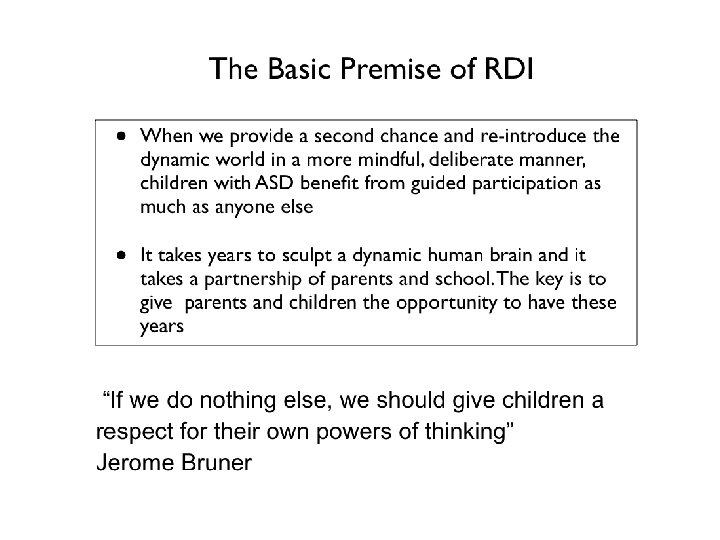
Have faith in your child. About all, have faith in You.
Just like this wonderful family did.