Success stories
How My Autistic Son Blew A Preconceived Notion Into Smithereens
-
 |
-
 5 Min read

Share


“Blood test?” he asked as he stretched his arm out towards the person on the sofa.
I was startled by Mohit’s question.
Being engrossed in a conversation with his teacher, I had not realized that somebody had walked into the living room and occupied a sofa!
But Mohit had. And he responded even before I noticed.
He saw the unfamiliar person’s backpack and thought he was there for a blood draw.
My mind went into analytical mode about what this meant in terms of thought processes.
He noticed something unusual. (An unfamiliar person seated on the sofa)
He dug into past experiences. (I don’t know this person. Who is he?)
Made a comparison. (Have I seen him before? Who does he look like?)
Fitted it into a past experience based on observation. (He has a back pack. Could he have come for my blood test?)
Came to a conclusion/made a decision. (I should go and check with him)
Took action. (walked to him, stretched his arm out and asked, ‘blood test?’)
Please note: this is my analysis of Mohit’s thought process, triggered by his action.
The important part is I reached point 1 only after he completed point 6!
This time I delved into my own thought process.
Is Mohit slow or am I slow? How dare I underestimate him?
We commonly use ‘lack of awareness’, ‘inability to think’, ‘slowness’, when we talk about autistic individuals.
But this incident proves otherwise.
Over the years, slowly but surely my view of autism has changed. Mohit and my students ensure that it keeps changing.
We, as a society have bought into the negative beliefs surrounding autism.
The minute we hear the word, ‘autism’, we give up on the individual.
Stigma surrounds the diagnosis, leading many families to hide the diagnosis.
It’s time to work on removing this stigma.
It’s time to make a leap from the negative to the positive aspects of autism.
Challenge your beliefs
The day your child was diagnosed, your pediatrician painted a grim prognosis. Mine did too and I’ve heard this from hundreds of other parents.
Then teachers and principals announced the need for special education, as your child couldn’t cope in a regular school.
Over a period of time and without knowing it, you also started doubting your child’s capability.
I did too.
It’s time to connect with your heart. Deep down you know your child is capable. He has shown you in many small ways, just like Mohit did in the ‘blood test’ incident.
You need to make a choice.
Are you going to believe the judgments the rest of the world pronounces without even knowing your child? Or are you going to go by the evidence your child gives you?
The ball is in your court.
I hope you decide to choose the latter.
As my favorite teacher says,
“Nobody is going to pick you. Pick yourself.”
– Seth Godin
Become mindful and observe your child
Once you’ve decided to follow your heart, take a deep breath and commit to openly observing your child.
Observe without judgment. Look at what she’s trying to tell you.
Observe how she takes on challenges and responds to situations.
In a previous article I had explained this in depth.
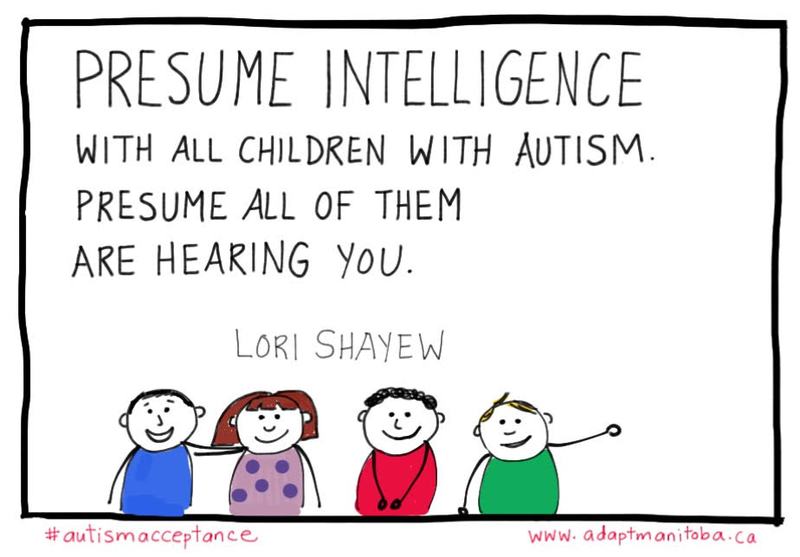
Calm yourself down and presume intelligence as you watch your child.
Be open and let your child take responsibility
Slow down and reduce instructions.
Do things together with your child.
For example: Make a cup of tea together. Does your child gather the ingredients? Does he add water to the pan? Does he add the tea leaves without being told?
If he doesn’t, you do it in a demonstrative fashion.
But punctuate your interaction with pauses to give him time to jump in when he needs to.
Let him take some of your responsibility- even if he takes longer and is not perfect.
You will find your own load lessening.
Trust me, you’ll experience relief. Your child will experience competence.

Repeat this procedure with many activities across the house
Involve your child in several activities. Expect her to share your responsibilities. Let her know this.
Tell her you expect him to help around the house.
If you’re cleaning out a drawer, a closet or your desk, encourage your child to help you.
Share responsibilities. Over a period of time, your child will look forward to these opportunities.
And so will you.