Success stories
What To Focus On In Your Autistic Child’s Journey As S/he Grows Older
-
 |
-
 5 Min read

Share


Time goes by in a flash.
Wasn’t it just a few years ago that my son, Mohit was diagnosed with autism?
The search for treatment took up most of those early years.
Many events from that time of my life are a blur.
It seems like Mohit was just in school in Seoul.
Then he was just in a resource room in a leading school in Dubai.
Then he moved to special education, once we moved to Mumbai.
Today he’s an adult. He doesn’t go to ‘school’.
He’s an artist.
The journey from childhood to adulthood has gone much swifter than I expected.
This article is a reminder for parents of autistic individuals.
Plan for the future. Don’t get so caught in the nitty gritty of the small things that you forget that one day your child will become an adult.
Take a long term view of life.
Use a wide eyed lens, while you’re at it.
Each of us should be thinking about independence- or the maximum independence our children can achieve.
Financial planning is a must. Reach out to Mr. Ranganathan at the Forum for Autism for an indepth understanding.
Focus on the following:
Beyond academics to aptitude
What does your youngster enjoy doing?
Is he a computer whiz? Is he artistically inclined?
Is she good at sports?
Focus on what your child shows an aptitude for.
If you’re not sure, get a professional to help you.
Beyond theory to practical
Think of ways of teaching practically.
Stop focusing on teaching size, shapes and colors in a regimented, all consuming manner.
Think about this. Who in the real world will ask your child, “what color is this?”
She may have to match clothes appropriately or share something about her favorite color. Work on those skills via experiences.
Give them the experience of a variety of activities.
Connect with them through these activities.
While you’re at it- teach them to think.
What if you’re out of salt or sugar while cooking?
It’s not a perfect world out there.
Challenge your child mentally.
By doing so, you’re preparing them for the real world.
Beyond table top to the outside world.
It may be necessary to teach some concepts at the table. For example- you may want to teach recognition of currency notes and coins at the table.
You may even teach simple addition and subtraction in discrete environments.
But don’t forget to take your child to the super market or a restaurant to buy his or her favorite snack or food. Let them experience the use of money and taking change back.
Let them run simple errands, under guidance.
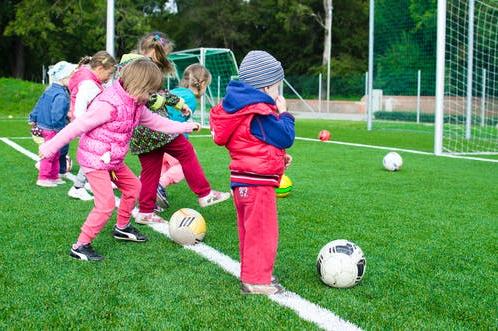
Don’t forget exercise
In today’s time and age, it’s easy to occupy children on a laptop or tablet.
But they need to be physically healthy too.
Make it a priority to exercise out in the open each day.
Biking, walking and running are perfect outdoor activities.
Besides, the release of endorphins during these activities will keep your youngster emotionally regulated.
Teach static and dynamic
The world is in a state of flux.
We have to teach our youngsters to be flexible and adaptable.
They may have cleared their 10th and 12th grades, but are they able to take the changes inherent in life?
Do changes make them anxious?
If you’re dealing with an anxious child, think about a program that works on the Core deficits of autism, such as the RDI Program.
Trust me, your life will change.
Work on them holding down a job
While one may land a job, are they equipped to hold on to it?
It’s much more than knowledge of static skills.
It requires:
a) relative thinking
b) flexible thinking
c) Adaptability
d) Problem solving
I recently did this exercise with the parents of a 20 year old.
When asked what 3 possible jobs they would like to see their youngster holding down, they came up with:
A. A front desk job at a restaurant or hotel.
B. A sales person’s job at a store
C. A data entry office job at his father’s work place.
So, we’re going to work backwards from here.
This would include taking a stock of the static and dynamic skills needed for these jobs.
We’ll have to put a timeline on it to decide how long we’re going to take to teach these skills or functions.
For example: As front desk personnel, talking politely and waiting for the customer to answer requires dynamic thinking. Those conversations cannot be scripted as it’s not possible to predict how a customer may respond. Or what she might ask.
While feeding data into a computer or checking something on a computer may require teaching of static skills.
Both are important in this case.
From work to leisure
“All work and no play makes Jack a dull boy.”
We’ve all heard this idiom since our childhood days.
It’s true.
Make sure to include leisure activies for your child.
These could be art, reading, writing, wi fitness etc.
I’ve just skimmed the surface with these points.
We could spend hours discussing each of these for your child.
Each youngster needs a customized program. One size does not fit all.
Spend your time with that long term view.
Focus on where you want to be. Don’t get so lost in the day to day tasks that you forget your goal.

If you need help in looking ahead for what your child needs, reach out.
I’ll be happy to support you on your journey.
We, at SAI Connections can help you set up a customized program for your adolescent or adult.