Success stories
What You Are Seeking Is Also Seeking You
-
 |
-
 7 Min read

Share


This 6 year old’s parents are both gentle and mild mannered. The visited us for an RDI assessment, flying in from a different city.
I could see the immense effort the mother was putting in to interact and engage with the child. Both parents had their doubts and reservations about being able to connect meaningfully with their child. I had to reassure them several times.
“It will be fine. I know you’re overwhelmed right now. Give it some time.”
Once they went back to their hometown, they struggled to connect with their child. They asked for an extension and then another to get going with the program.
When we finally connected, I could sense the mother’s guilt.
It took me back to all the years that I had been plagued with guilt.
Those days I would work with Mohit 4-5 hours every day, yet I felt I wasn’t doing enough.
Somehow I felt responsible for his autism. I was convinced I had done something wrong for him to be autistic.
That thought was reflected by many other mothers I met.
“Maybe I didn’t rest enough in my pregnancy.”
“I was so busy with my work, that I didn’t pay attention to him. I shouldn’t have gone back to work after the delivery.”
“I’m not the hugging-kissing kind of mom, is she autistic because of that?”
The guilt is accompanied by feelings of frustration and unfulfillment.
It is like a void deep within.
You may be taking your child from one therapy to another, but may still be feeling unfulfilled.
It’s hard to put a finger on what exactly you feel. Do you identify with any of these?
• You feel like you are operating in day-to-day survival mode.
• You feel unable to take a step back to obtain a larger perspective.
• You have narrowed your focus and expend all of your energy putting out fires and reacting to immediate problems.
• You are functioning at a frantic pace that leaves you unable to productively reflect, or consider the future.
• You often feel physically and mentally exhausted.
• You sometimes feel desperate, willing to try anything and everything.
• You have become fearful of change – afraid of rocking the boat in any manner.
(Taken from RDI Connect, Dr Steven Gutstein)
Don’t despair. It’s not the end of the road, it’s just a bend in your road.
Things will get better.
Start with these pointers.
Take care of yourself
Unless you take care of yourself, you cannot take care of your child.
When I asked the mother in the example above, what she liked to do, she hesitatingly answered that she liked to do gardening. As an after thought, she added that she loved playing squash, but hadn’t played it in years.
It’s strange how we think we need to give up on things that make us happy, once our child is diagnosed with autism.
Don’t punish yourself.
You need to be happy first.
The first assignment I gave the mother was to do some gardening that week. And yes, to definitely enjoy a game of squash.
Schedule a time to connect with your child
When we’re not habituated to spending quality time with our child/children, scheduling a time to engage with your child may be very important.
The mother selected an evening slot of 7 pm to 8 pm to interact with her child.
Initially, she found it difficult to stick to her timing.
This is how she got on track.
“I set a limit at work. I leave at 7 pm – no matter what.
My son is my priority. Now I feel relieved.”
Once you decide that you are important and so is your relationship with your child, you will not compromise.
Start with 10 minutes
Tiny habits go a long way. Start small.
10 minutes of good quality time with your child, working on just a simple framework, will jumpstart the motivation to engage with your child.
You could just decide to clean up the room with your little (or not so little) apprentice.
Pick up the toys that are strewn around, put the pillows in place, adjust the bed sheet and put the books away.
The key word is – together.
You may have to help initially. But it will get better.
Focus on the emotions. Slow down and share glances. Don’t be in a rush.
Go declarative
Running with the book shelf example above-
Hand the book to your child and WAIT.
See what she does. Don’t use a direct instruction.
When you hand the book over, don’t say, ‘put it on the shelf.’
Wait and see what your child does. If she’s confused and looks at you, encourage her with your smile and say, ‘I wonder where it goes.’
Wait some more. Create that little tension. Shift the thinking responsibility to your child.
If she gets it- that’s great.
If not, gently take her hand and walk towards the book shelf. Let her decide where she wants to put it.
Don’t be obsessed with it being exactly right.
Focus on the thinking and not the skill.
This list will be handy.
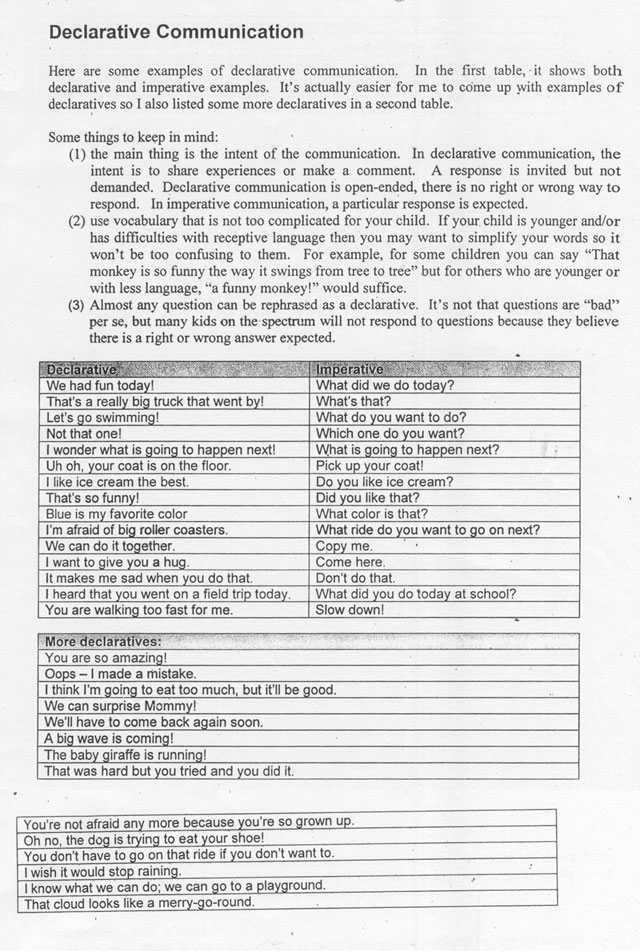
Watch this amazing dad guiding his child.
Be consistent
Do this daily. Every day for the next couple of weeks.
Eventually it will become a habit.
Preplan the activity. Write it down on a sheet of paper or save it on your phone. Keep items required ready. When you came back home in the evening, the activity will be prepared for you. Then it’s just a matter of slipping into it.
For example- if you’re preparing an evening snack with your child, check to make sure you have all the ingredients at hand.
10 minutes, every day for 3 weeks and you’re set.
One of my favorite teachers, Seth Godin says:
Consistent with your statements, consistent in the content you create, consistent in the way you chip away at the problem you’re seeking to solve.
And the best thing is that you only have to make the choice to be consistent once. After that, it’s simply a matter of keeping your promise.
Taken from Seth’s blog.

source: CAPP
Over time, you will begin to enjoy your interaction with your child.
You will look forward to this precious time.
It will no longer be burdensome or heavy. Instead, it will be light hearted and joyful.
Rojeeya (the mother in the opening paragraph) went on to share an anecdote.
“I involve him in whatever I’m doing at home.
We pick up toys, put dishes away- all the regular work.
The other day, I took him shopping to buy clothes.
Earlier I would only shop online.
This time we went to the store, picked clothes based on Ryan’s choice.
We went and tried the clothes.
It gave me so much pleasure. Such a simple task, but we’ve never done it before.”
Once Rojeeya realized she was in crisis, we worked on each of the above mentioned points.
What she didn’t realize she was missing was the Emotional Connect between her son and her.
You think you miss speaking with or interacting with a‘ normal child’.
But what you actually miss is connecting with child in front of you.
Go Connect. Your child is waiting. Your child was always waiting and ready for you.
Are you ready now?
Feel free to reach out for a customized program for your family.