Success stories
Why Passing The 10th Grade Will Not Guarantee Your Child A Job
-
 |
-
 10 Min read

Share


Over the past years, Dr. Renuka prayed that her son, Sanjeev would go to college. At his mother’s behest, Sanjeev also prayed, “Dear God. Let me go to college.”
Their dream became a reality a couple of years ago, when Sanjeev joined a pastry making college for individuals with special needs. The family lives in Malaysia.
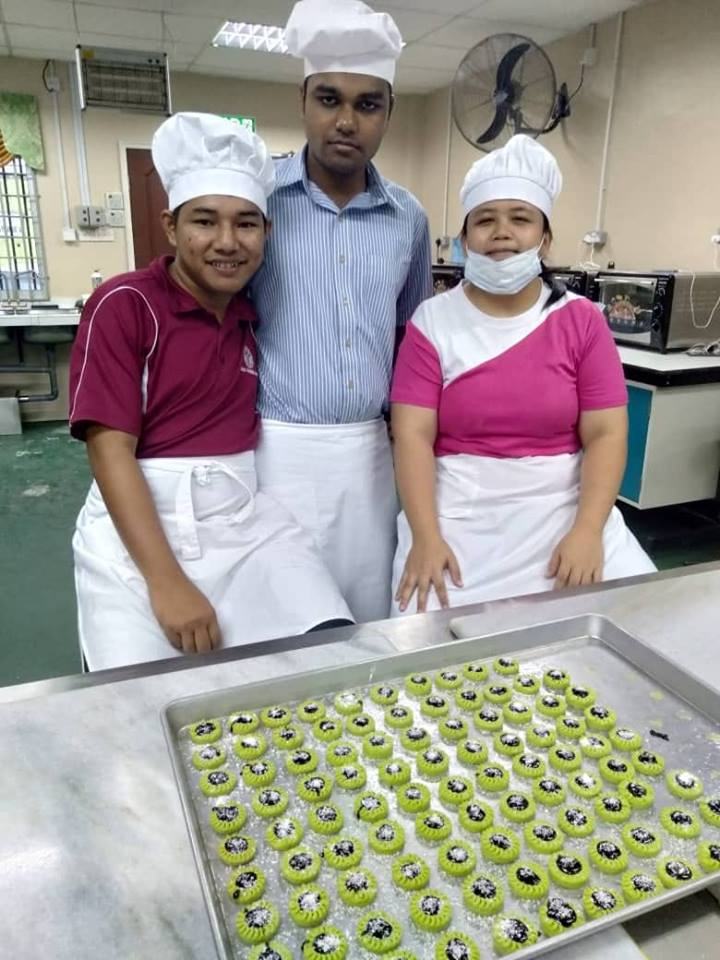
It was time to secure an internship at the end of the college year.
Renuka struggled to contact various bakeries and food establishments to get an internship for Sanjeev.
They struck gold when one organization accepted Sanjeev.
Not only as an intern, but as a full time employee for 4 months.
Plus the contract is open to further extension.
Being the Consultant on their RDI Program, I was ecstatic!
Employment is an area of struggle for many adults on the spectrum.
What is your autistic adult going to do when he crosses 20/25 years of age?
Some students on the spectrum may not get past the education system. Special schools provide functional skills and set up vocational centers or sheltered workshops for them as they grow older.
For others, it’s a race to the finish line for the 10th or 12th grades.
But after that, what?
The years of hard work, extra classes, tuitions don’t necessarily translate into meaningful employment.
Take a look at the prerequisites that need to be in place in order to acquire and maintain a job.
Employability Skills
The Conference Board of Canada
Communication
Try this at home this week
5–10 min a day- Read and understand information presented in a variety of forms
- Write and speak so others pay attention and understand
- Listen and ask questions to understand and appreciate the points of view of others
- Share information using a range of information and communications technologies
Think and Solve Problems
Try this at home this week
5–10 min a day- Assess situations and identify problems
- Seek different points of view and evaluate them
- Recognize the human, interpersonal, technical, scientific and mathematical dimensions of a problem
- Be creative and innovative in exploring possible solutions
- Check to see if solutions work and act on opportunities for improvement
Be Adaptable
Try this at home this week
5–10 min a day- Work independently or as part of a team
- Carry out multiple tasks or projects in a prioritized way
- Be innovative and resourceful: identify and suggest alternative ways to achieve goals and get job done
- Be open and respond constructively to change
- Learn from your mistakes and accept feedback
- Cope with uncertainty
Learn Continuously
Try this at home this week
5–10 min a day- Be willing to continuously learn and grow
- Assess personal strengths and areas for development
- Set your own learning goals
- Identify and access learning sources and opportunities
Work with Others
Try this at home this week
5–10 min a day- Understand and work within the dynamics of a group
- Be flexible: respect, be open to and supportive of others thoughts, opinions and contributions
- Accept and provide feedback in a constructive and considerate manner
- Understand the role of conflict in a group to reach solutions manage and resolve conflict when appropriate
Plan, Analyze and Monitor
Thank you Judith Barnett, (RDI Consultant) for sharing this list.
I wasn’t surprised to see that this list didn’t have much of the curricula taught in the 10th and 12th grades.
The focus was more on thinking and solving problems, adaptability, flexibility, collaborating with others.
All these fall under the umbrella of dynamic thinking.
Over the past 3 years, since the Nambiar family has been on the RDI Program, we have worked on dynamic intelligence.
Renuka has spent hours working on challenging Sanjeev to think and solve problems. We’ve worked on sharing experiences and bonding emotionally.
We’ve put Sanjeev on the spot in situations that don’t have a right or wrong answer. He’s had to learn to make his own decisions. This has resulted in Sanjeev becoming confident in real life situations. He now enjoys being challenged. He’s far more flexible and adaptable.
Renuka has stood like a rock behind her son.
Hear it in her own words.
I need to mention here the fact that I had reached a plateau a few years ago, teaching him. I did not know what else I could do to take Sanjeev further. He was so good in so many areas, but he lacked so much in so many others! That’s when, three years ago, I reached out to RDI in general, and Kamini Lakhani in particular. RDI taught me how I could tap further into Sanjeev’s potential. It empowered me in a way, nothing else had before. With Kamini Lakhani spreading the safety net beneath us, I dared to fly higher with Sanjeev in tow, knowing she was there to catch us if we missed. She and I became a powerful force to push Sanjeev, little by little, higher and higher! Sanjeev took up the challenge each and every time. The more we pushed, the more he progressed. The more we let him taste success, the more he thrived. Until to this day, when he has gainfully got himself employed. He will be starting one month from now.
You can work on what Renuka worked on by following these pointers.
Try this at home this week
5–10 min a day- Plan, design or carry out a project or task from start to finish, with well-defined objectives and outcomes
- Develop a plan, seek feedback, test, revise and implement
- Work to agreed quality standards and specifications
- Select and use appropriate tools and technology for the specific task or project
- Adapt to changing requirements and information
- Continuously monitor the success of a project or task and identify ways to improve
Work on yourself. Work with a coach.
As parents, we carry a lot of stress about our child’s future.
We need to channelize this meaningfully.
It works wonders to collaborate with a Guide, who has an objective view of your situation.
Your family situation is unique. Your child is unique too.
You need a customized program for your child.
Link academic skills of reading, writing and comprehension to experiences your child has.
We break learning into pockets of reading, writing, speaking, typing.
How about linking all of these to experiences the child or adult has?
Creating a link with the experience makes it meaningful.
For example, if you’ve cooked or baked together, you could write about that.
Here’s how a dad helps his son to encode a laundry experience.
Don’t be dejected if your child cannot read or write. Use other forms of communication.
Many of my students, including Mohit, currently work on their typing skills.
Many use the AVAZ app to communicate.
Remember, not being able to speak is not the same as having nothing to say. Always presume competence.
Coming from the place of ‘my child knows,’ will create a sea change in the way you work with her/him.
I’ve written extensively about this.
Focus on problem solving.
Deliberately set up situations in which your child is put on the spot for thinking. Don’t be in a hurry to get things for your child. Sow down.
If you’re jointly cooking Maggi noodles with your child and he can’t split open the ‘masala’ packet, what do you do?
Would you do it for him? Or would do you let him stew a bit with the problem till he finds a solution?
I highly recommend the latter.
Engage in many open ended frameworks.
Lay ingredients out and let your child get to work- let him or her be creative.
In this example, Viji gave Vishal some left over boiled rice. Look what he created out of it.
Understand how your child learns. Every human being wants to grow.
Teach in a way your child learns.
If a child does not learn, it is not his failure.
The onus lies upon us.
It’s really important to focus on providing opportunities for each of our students or children of ANY age to help them develop in a way that makes sense for them. Not in a way that compares them to someone of the same age, (or any age for that matter!) and with an understanding that development requires a progression, a series of many, many different steps. Development is not a linear process. So, just to say this person is this age, so we should be doing this, really makes absolutely no sense, does it? Because it neglects the fact that they may or may not be ready. And if we push them into that place, then they never develop the readiness to move on to continue to develop.
– Dr. Steven Gutstein, Founder, RDIConnect.
From a young age, set up frameworks where children work with each other.
Watch these 2 young boys co ordinating with each other.
As they grow older, the ability to collaborate will be highly valuable.
It starts with these little activities when they’re still young.
As they grow older, let them decide what they want to do. Let them plan sessions for themselves.
At SAI Connections, our older boys and girls don’t have a fixed timetable in the afternoons.
Teachers set up different work stations.
For example: They may set up a cooking station, a computer station, a dance station and an art station.
Students decide where they need to go.
They are encouraged to try out at least 3 of the 4 stations.
Work on what is important.
This article is for you, if you’re ready to step out of your comfort zone.
It’s not about IQ assessments. Those don’t portray the potential of our students.
It’s about giving your child tools to work towards independence and meaningful employment.
Your children are capable of much more than you think.

Painting by Mohit Lakhani, Autistic Artist
Here’s an inside story I’m sure Renuka wouldn’t mind me sharing.
3 months ago, I had sent her the employability skills list for Sanjeev.
She wasn’t impressed. She thought it was not applicable for him.
But Sanjeev allayed all our doubts and fears.
Life took a turn. And he now has a job.
Don’t ever give up on your adult with autism or special needs.
Build the skills and foundations necessary to hold a job.
Then the sky is the limit.